
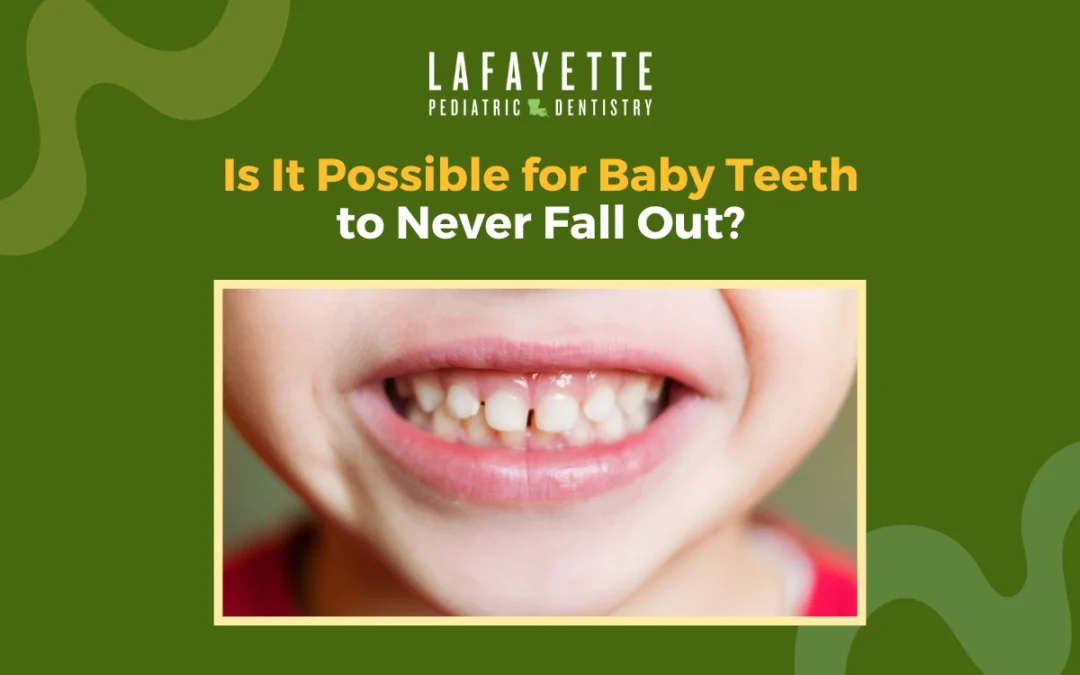
Most parents expect their child’s baby teeth to fall out on their own and be replaced by permanent teeth as they grow. This usually wraps up around age 12, when kids lose their last baby molars and make room for their adult teeth. It’s one of those childhood milestones that feels automatic, like learning to walk or ride a bike.
But sometimes things play out differently. There are cases where baby teeth stay in place well past childhood, even into the teen years or adulthood. We’ve had parents come in feeling confused or worried because their teenager still has a baby tooth that isn’t budging.
Why Do Some People Have Baby Teeth That Don’t Fall Out?
When this happens, it’s called retained baby teeth. The technical term you might hear is “over-retained primary teeth.”
For some kids, baby teeth stick around simply because that’s how their bodies developed. There’s no major underlying issue, just a variation in how their teeth came in and how quickly they were replaced. Genetics can play a role too. If someone in your family had retained baby teeth, there’s a higher chance it could happen to your kids as well.
Read also: Is a Double Row of Teeth Normal? Our Board-Certified Pediatric Dentist Explains
Retained Baby Teeth Can Last Decades
Retained baby teeth aren’t always random or just a quirky family trait. There are documented cases of people in their 20s, 40s, 60s, and even older who still have one or more baby teeth that work just fine.
A few different factors can explain why some baby teeth never fall out. One common reason is a condition called hypodontia, which means some permanent teeth never developed. Baby teeth usually fall out because the permanent tooth underneath pushes upward, loosening the roots until the tooth comes out.
When there’s no permanent tooth there to do the pushing, the baby tooth doesn’t have a reason to loosen. It can stay put for years, and in some cases, for a lifetime. We can usually spot hypodontia on an X-ray. We take images of your child’s jaw and count the permanent teeth that are developing.
Another possibility is that the permanent tooth is there, but it isn’t in the right position to push out the baby tooth. It might be angled the wrong way, blocked by other teeth, or sitting too deep in the jaw. Without pressure in the right spot, the baby tooth stays anchored and keeps doing its job.
One thing we tell parents is that a retained baby tooth isn’t usually an emergency. It’s not something that’s going to cause immediate harm. It just needs monitoring. We want to keep an eye on how well it’s holding up, whether it’s affecting the bite, and whether the surrounding teeth are starting to shift in ways they shouldn’t.
Read also: What to Expect at Each Stage of Your Child’s Dental Development
The Importance of Regular Monitoring and Maintaining Good Oral Hygiene Habits
Regular dentist visits become especially important in these cases. We can take X-rays to check for permanent teeth under the gums and see whether they’re likely to come in later. That helps us decide whether to leave the baby tooth alone, remove it, or talk about options like orthodontics or future restorative treatment.
Good oral hygiene is key too. Make sure your child brushes twice a day, flosses regularly, and keeps up with routine dental checkups. This helps keep retained baby teeth as healthy as possible for as long as they’re around.
At each visit, we’ll keep an eye on any signs of loosening, decay, or other issues that might need attention. Even though it’s a baby tooth, it can still get cavities or gum problems as your child gets older.
The bottom line is that retained baby teeth happen, and they’re manageable. Some kids keep a baby tooth into their teens or even adulthood without any problems. Others need treatment a little sooner. Either way, keeping up with dental visits and good hygiene gives your child the best chance at a healthy smile.
We care for children of all ages throughout Lafayette and surrounding communities, including Breaux Bridge, Carencro, Youngsville, and Broussard. If you have questions about your child’s teeth or want to schedule a visit, feel free to call us or request an appointment online.