
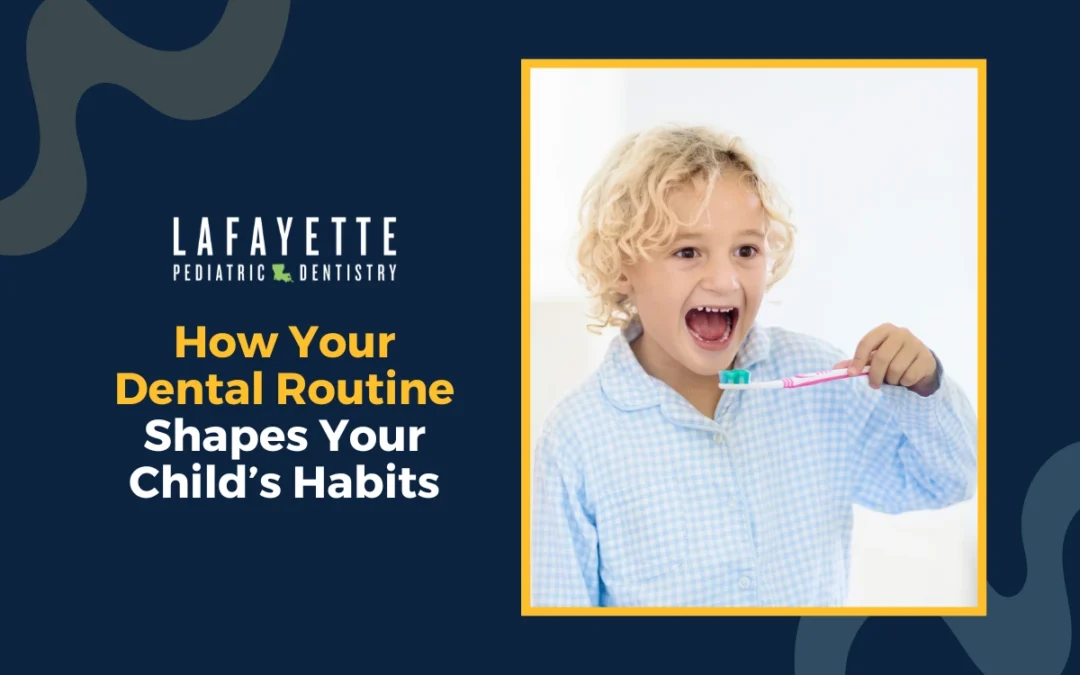
Children learn by watching the adults around them. Before they can explain their actions, they begin to pick up on everyday patterns. This includes how routines are handled at home.
Oral hygiene is part of those routines. The habits you follow and the tone you bring to them can influence how your child begins to view dental care. Over time, these repeated moments shape how they approach brushing, flossing, and general care.
What Your Child Learns From Watching You
Your child watches your behavior closely, especially in the early years. When you brush at night, floss regularly, and go to dental checkups without concern, you show that these are normal parts of adult life.
These habits are easy to notice. Brushing in the bathroom, flossing after meals, and keeping appointments become part of what your child expects to see.
Children also notice your tone and attitude. If you seem uneasy about the dentist or treat brushing as a chore, those impressions can carry over. Children often notice differences between what adults say and what they do.
How Your Attitude Shapes Your Child’s Early View of Oral Health
The tone you bring to dental hygiene can influence how your child begins to feel about it. You do not need to show enthusiasm for flossing. Treating oral care as part of the day, rather than something to avoid, helps your child form early expectations.
These impressions often develop through small, repeated moments. If you seem uneasy about the dentist or frustrated during brushing, those reactions can be noticed. Saying “this might hurt a little” before a visit can create concern that was not there before.
Building a Routine You Share With Your Child
Brush, Floss, and Rinse Together
Brushing alongside your child, instead of watching from a distance, gives them an example to follow. Standing at the sink together in the morning and at night shows how brushing, flossing, and using mouthwash fit into daily life.
Introduce a Healthy Diet to Your Child Early On
Sugary drinks and sticky foods are the main cause of dental issues we see in our office. It sounds simple to ask your child to limit their consumption of these foods and drinks, but it is often more effective when they see those habits modeled at home.
For instance, you can swap soft drinks for water, add more vegetables to your family’s dinner, or offer fruits instead of sweets. Not only do these routines help your child’s oral health, they also help your own. When your child sees these habits as part of everyday life from the beginning, they tend to carry them with them as they grow.
Read also: Fruit Juice Isn’t as Sweet as It Seems for Your Kid’s Teeth: Here’s Why
How You Talk About Dental Visits Can Influence Your Child
Dental anxiety is common and can affect people of any age, even after many visits to the dentist. Try to talk about dental visits in a neutral way with your child, even if you feel some dental anxiety yourself, and present them as something that helps keep their teeth healthy and comfortable.
It can also help to use calm, neutral language in the days leading up to the appointment, as this may reduce the chance of creating negative associations with dental visits for your child.
A child’s oral health habits are shaped most by what they observe and repeat at home, and daily actions from parents or caregivers often speak louder than instruction alone.
Read also: Here’s What to Do If Your Child Has Dental Anxiety
Our pediatric dental team in Lafayette has been caring for children across the Acadiana area for over 15 years, providing dental care for patients from infancy through adolescence.
We are here to guide families through each stage of a child’s oral health development. If you have questions or would like to schedule an appointment, we welcome you to get in touch with our office.