
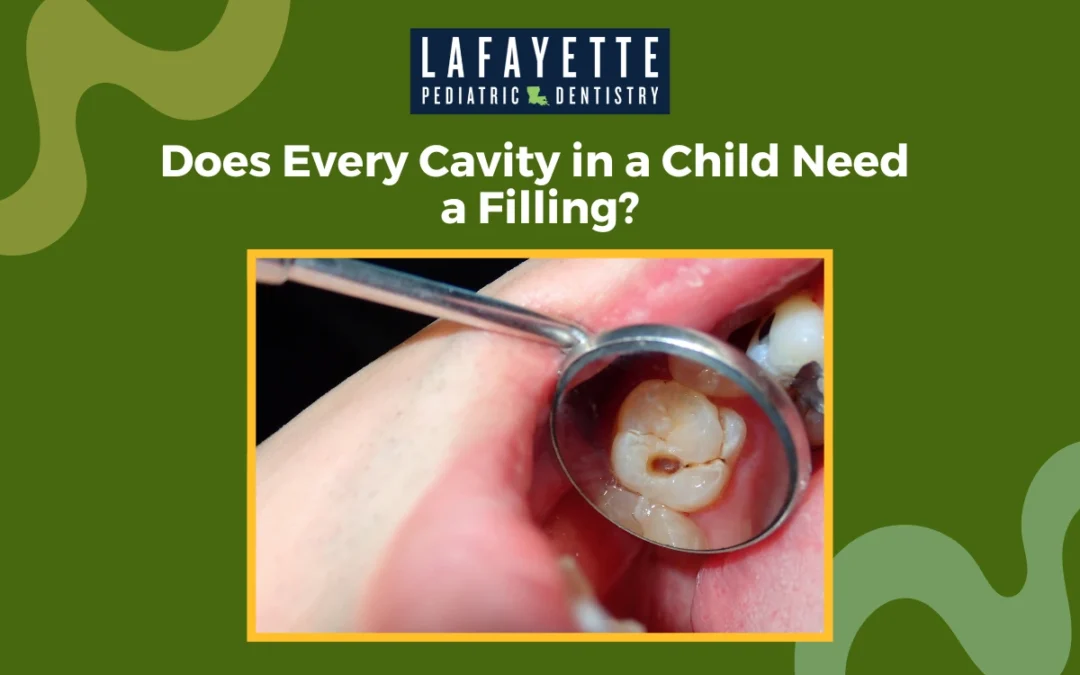
When a dentist says that your child has cavities, the first thing many parents think about is getting them filled. But is it really true that every cavity needs a filling? In this article, we answer this question and explain what goes into deciding how a child’s cavity should be treated.
Does Every Cavity in Kids Need a Filling?
The short answer is no, not automatically. Cavities are not all treated the same way, and a pediatric dentist looks at several factors before deciding on a treatment plan.
These can include how large the area of decay is, where it is located on the tooth, how quickly it appears to be progressing, and your child’s age, along with other factors.
When a Child’s Cavity May Not Need a Traditional Filling
Early-Stage Tooth Decay
At the earliest stage, before a hole has formed, there may be options besides a traditional filling. Fluoride toothpaste, fewer sugary snacks and drinks throughout the day, and fluoride varnish may help stop decay from progressing or even reverse it.
Additionally, newer medicaments like silver diamine fluoride and Curodont™ peptide applications can arrest the growth of early decay and potentially eliminate the need for further intervention!
Your child’s dentist will recheck these areas at the next visit to look at whether it seems active, such as getting bigger or darker over time, or whether it appears to have stopped progressing. Some children need additional treatment, but early lesions can sometimes be managed without a filling.
Read more: Baby Bottle Tooth Decay: What It is and How to Prevent It
Certain Baby Teeth
Your child’s age and the type of tooth involved also factor into the decision. A front baby tooth that is already loose and due to fall out soon is a different situation than a baby molar that may be needed for several more years of chewing. Still, the fact that a baby tooth will eventually fall out is NOT a reason to ignore a cavity.
Baby teeth hold space for permanent teeth, and an untreated cavity can lead to an infection or toothache before the tooth is ready to come out on its own.
Many parents don’t realize that baby molars remain in your child’s mouth until ages 12-14! Your child’s dentist will consider the expected timeline for that specific tooth, along with the size and activity of the cavity, before deciding if a filling is needed.
When a Filling is More Likely to be Recommended
In some situations, a filling may be recommended during your child’s dental exam. This is more likely when:
- An open hole has formed in the tooth
- Decay has moved beyond the enamel into deeper layers
- Your child has pain or sensitivity in that area
- Food keeps getting stuck in the same spot
- Restoring the tooth now may help prevent extensive dental problems later
When one or more of these concerns are present, a filling or another restorative option may be recommended as the next step.
Read more: Is Your Child’s Tooth Forming a Cavity? Spot the First Signs
Not Every Cavity Requires the Same Treatment
In summary, an early area of decay that is caught before it becomes an open hole can sometimes be managed with improved oral hygiene and regular monitoring instead of a filling.
A cavity that has already progressed, especially one that has reached deeper layers of the tooth or is causing pain, is different and will usually need to be restored.
A cavity in a baby tooth should not automatically be left untreated just because the tooth will eventually fall out.
Each child’s mouth is different, and so is each cavity. Your pediatric dentist needs to examine the tooth in person to determine the appropriate next step.
Our Lafayette pediatric dental team is proud to care for families throughout Acadiana at every stage of childhood.
For more than 15 years, we’ve provided compassionate, high-quality dental care for children in our community. We offer a comprehensive range of services to support your child’s oral health and development, including preventive and restorative treatments such as fillings, crowns, and extractions.
Contact us to learn more about our pediatric dental services or to schedule your child’s appointment.