
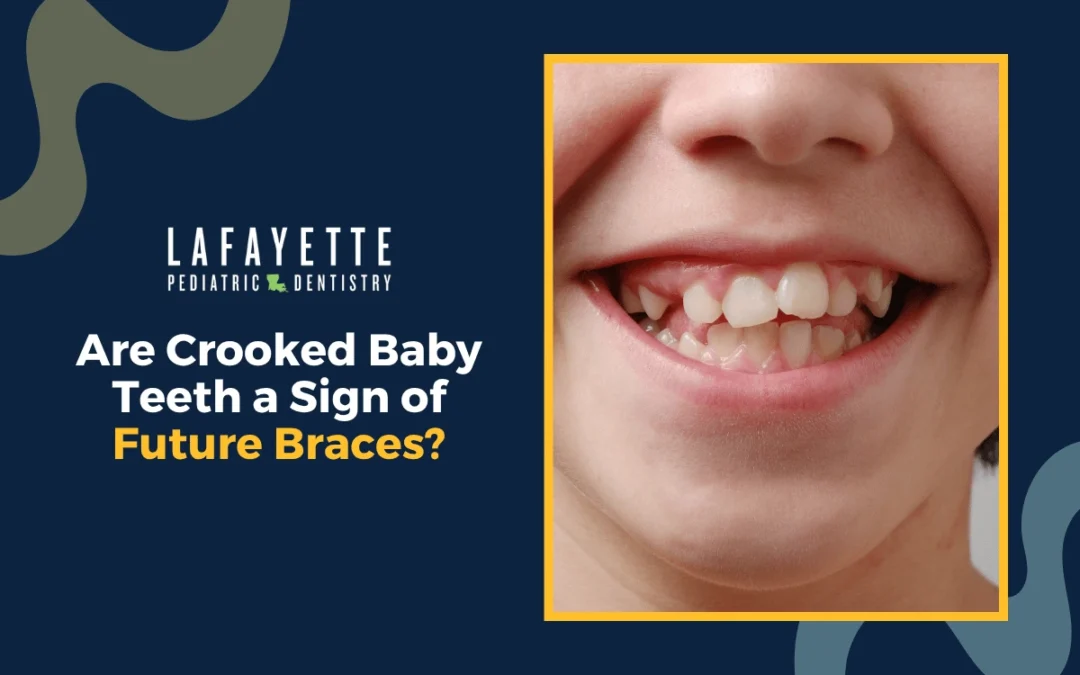
Many parents notice their toddler’s first teeth coming in a little crooked and start wondering if braces might be needed later. It’s a common question in our office. The answer is more nuanced than a simple yes or no.
A child’s bite changes significantly between infancy and the teenage years, so baby teeth on their own rarely tell the full story.
Why Baby Teeth Often Look Crooked or Crowded
Small Jaws Leave Little Room for New Teeth
Your toddler’s jaw is still developing, and all 20 baby teeth need to fit into a relatively small space. As more teeth come in, they may press against each other, causing some to tilt, rotate, or overlap.
This is why the front teeth often look crowded. As your child’s jaw continues to grow, some of that crowding may improve over time.
Genetics Influence Jaw and Tooth Size
The size of your child’s jaw and teeth is largely influenced by genetics. If you or your partner had crowded teeth or needed braces as a child, your child may be more likely to develop a similar pattern.
Family history is only one factor, but it can increase the likelihood of alignment concerns as permanent teeth come in.
Mild Crowding is Common in Early Childhood
Mild crowding, small gaps, and slightly rotated teeth are all common during early childhood. Your child’s mouth continues to change through several stages before the permanent teeth settle into place. As a result, teeth that look uneven at age three may look very different by age seven or eight.
Read more: Do Crooked Baby Teeth Affect Permanent Teeth?
Do Crooked Baby Teeth Mean Your Child Will Need Braces?
It truly depends. Baby teeth and permanent teeth do not always follow the same pattern, and the two sets can look very different. Your child may have noticeably crooked baby teeth, but still develop permanent teeth that come in fairly straight as the jaw grows and creates more space.
The opposite can also happen. Your child may have straight baby teeth but still need braces later if the permanent teeth come in at different angles or there is not enough room for all of them.
For this reason, baby teeth are only one part of the picture. Pediatric dentists monitor how your child’s teeth and jaw develop over time before deciding if orthodontic treatment is likely to be needed.
Signs That Increase the Chances of Needing Braces Later
Crooked baby teeth alone usually are not a concern. However, some patterns can increase the chance that your child may need braces later.
Severe Crowding
Mild crowding is common. Teeth that overlap or twist noticeably may suggest there is not enough space in your child’s jaw for permanent teeth.
Bite Problems
Bite issues are often a stronger sign than crowding alone. These include an overbite, underbite, crossbite, or open bite.
Early or Late Tooth Loss
Baby teeth hold space for permanent teeth. Losing them too early or too late can affect how permanent teeth come in.
Oral Habits
Thumb sucking and extended pacifier use can put repeated pressure on the teeth and jaw. Over time, these habits may affect tooth development.
Read more: Surprising Habits That Can Affect Your Child’s Dental Health
What This Means for Your Child’s Next Visit
Crooked baby teeth alone do not reliably predict if your child will need braces. Jaw growth, genetics, bite development, the timing of tooth loss, and other factors influence how permanent teeth come in.
Regular dental visits provide a more complete picture as your child grows. If you notice crowding, bite concerns, or habits like thumb sucking that continue beyond the toddler years, our pediatric dental team in Lafayette, LA, can evaluate your child’s teeth, monitor their development, and answer your questions.
If you have concerns about your child’s teeth or bite, schedule an appointment with our office. We’re here to evaluate their development and discuss any treatment that may be needed.