
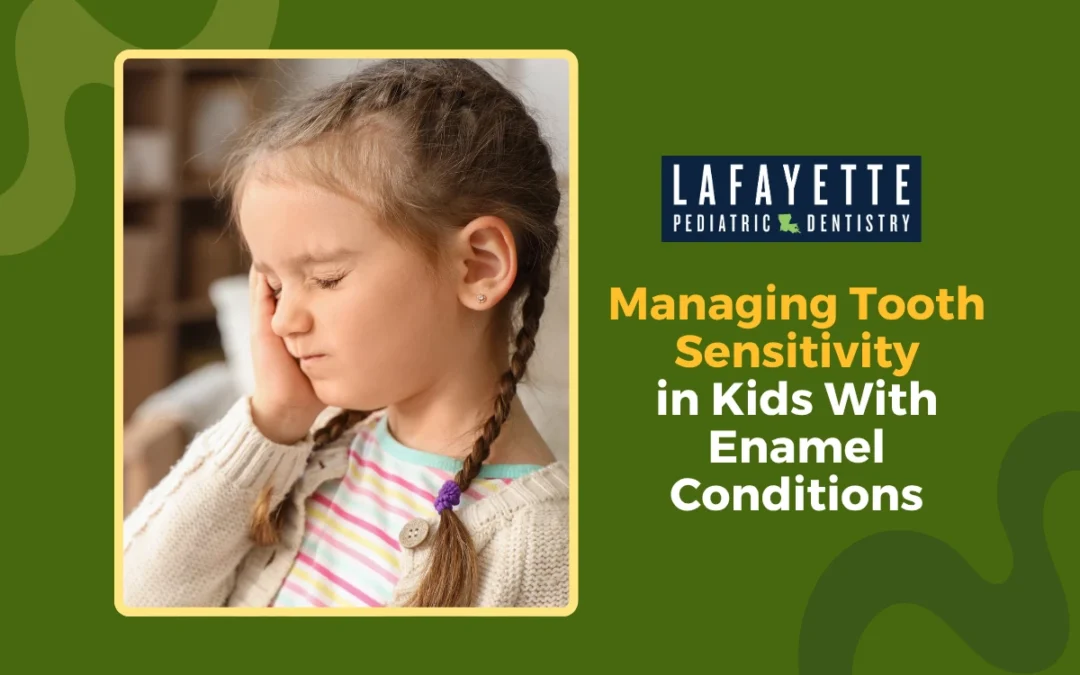
Tooth sensitivity in children with enamel conditions can turn everyday moments like a sip of cold water or a bite of ice cream into sources of discomfort.
Weak or underdeveloped enamel leaves teeth more exposed to temperature, pressure, and acidic foods.
Understanding what’s happening beneath the surface is the first step towards keeping your child comfortable and their teeth protected.
Why Some Kids Feel More Sensitivity Than Others
Enamel is the outer layer of the tooth and the hardest substance in the human body. It protects the softer, more sensitive inner layers from temperature, pressure, and bacteria.
When enamel is thin, pitted, or not fully formed, those inner layers are more exposed, which can lead to sensitivity.
Because of this, not all sensitivity feels the same. A child with compromised enamel may feel more discomfort than a child with a small cavity or temporary sensitivity after a dental procedure.
Two Enamel Conditions We See Most Often in Kids
There are several reasons enamel can wear down, including cavities, cracked teeth, gum recession, and teeth grinding. In addition to these, some conditions directly affect how enamel forms and develops.
Enamel Hypoplasia
Enamel hypoplasia means the enamel did not fully develop. Teeth with this condition may appear discolored, and the enamel layer is thinner than normal. It can affect baby teeth, permanent teeth, or both.
Causes include illness during pregnancy or early childhood, premature birth, nutritional deficiencies, especially vitamins A, C, and D, and certain medications. Fever-related infections during the years when teeth are forming can also contribute.
Read more: Enamel Hypoplasia in Kids: Causes, Diagnosis, and Treatments
Amelogenesis Imperfecta
Amelogenesis imperfecta is a rare genetic condition that affects enamel formation across all teeth. Children with this condition are born with enamel that may be soft, thin, or rough in texture. The teeth can appear yellow or brown, chip easily, and feel sensitive to temperature and touch.
Because this condition is genetic, it can run in families. If you have a family history of sensitive or fragile teeth, discuss it with your pediatric dentist early.
In both conditions, sensitivity develops in a similar way. With less enamel covering the tooth, the dentin underneath is closer to the surface.
Dentin contains tiny tubes that connect to the nerve of the tooth, allowing heat, cold, sugar, and even air to reach the nerve and trigger discomfort.
Daily Oral Care Routine to Manage Tooth Sensitivity in Kids with Enamel Conditions
For kids with enamel conditions, the focus is usually on prevention and maintenance, depending on the severity of the condition.
Choosing the Right Toothbrush
Start with a soft-bristled toothbrush. Anything medium or firm can wear down enamel that is already weak and may irritate exposed dentin. If your child is a bit older, an electric toothbrush with a pressure sensor can help since it lets them know if they are brushing too hard.
Using a Specialized Toothpaste
Have your child use a desensitizing toothpaste like Sensodyne. These usually contain potassium nitrate and stannous fluoride, which help calm the tooth nerve and reduce sensitivity over time.
Cutting Down on Acid and Sugar
Acidic foods and drinks like citrus fruits, juice, soda, and even some sports drinks can slowly wear down enamel. If your child already has thin enamel, that breakdown can happen faster. Try to limit those and offer options like fresh fruits and vegetables, milk, cheese, or yogurt instead.
Managing Food and Drink Temperature
If cold foods cause pain, let them sit out for a bit before eating. You can also serve drinks at room temperature or use a straw to reduce contact with teeth. The same idea applies to hot foods.
Keeping Your Child Hydrated
Make sure your child drinks water throughout the day. It helps keep saliva flowing, and saliva helps protect the mouth by washing away bacteria and neutralizing acids.
Professional Treatment Options to Discuss With Your Pediatric Dentist
Dental Sealants
Dental sealants are a thin, protective coating applied to the chewing surfaces of the back teeth. For kids with enamel conditions, they help fill in pits and grooves where bacteria tend to collect. This can lower the risk of cavities and help reduce sensitivity. The process is quick, painless, and sealants can last several years with proper care.
Read more: Dental Sealants: How They Can Benefit Your Child’s Oral Health
Bonding and Crowns
If the teeth are more severely affected, sealants alone may not be enough. In these cases, we may recommend dental bonding. This involves applying a tooth-colored resin to the surface of the tooth to cover areas where enamel is worn or missing, which can improve appearance and reduce sensitivity.
For baby molars that show significant damage, we may use stainless steel crowns or tooth-colored crowns. These crowns cover the entire tooth, help protect it from further breakdown, and can reduce nerve-related pain caused by ongoing exposure. Crowns can sound like a big step, but for teeth that are breaking down quickly, they offer a higher level of protection.
Read more: Does My Kid Really Need a Dental Crown?
Regular Checkups
For children with enamel conditions, regular checkups are not optional. Visits are often scheduled twice a year, and sometimes more often depending on your child’s condition. These appointments allow us to monitor how the teeth are holding up and make sure current treatments are still appropriate.
Managing tooth sensitivity in a child with an enamel condition takes a coordinated approach. Home care and diet adjustments can help, but they are most effective alongside professional monitoring and treatment.
If your child is experiencing sensitivity or you notice teeth that look unusual in color or texture, be sure to bring it up with your pediatric dentist. The same applies if you have a family history of enamel conditions. The earlier we catch these things, the more options we have.
Our Lafayette pediatric dental office works with families across the Acadiana area to keep kids’ oral health in good shape. Families in the community have trusted us with their children’s care for over 15 years. If you have concerns about your child’s oral health, book an appointment with us.