
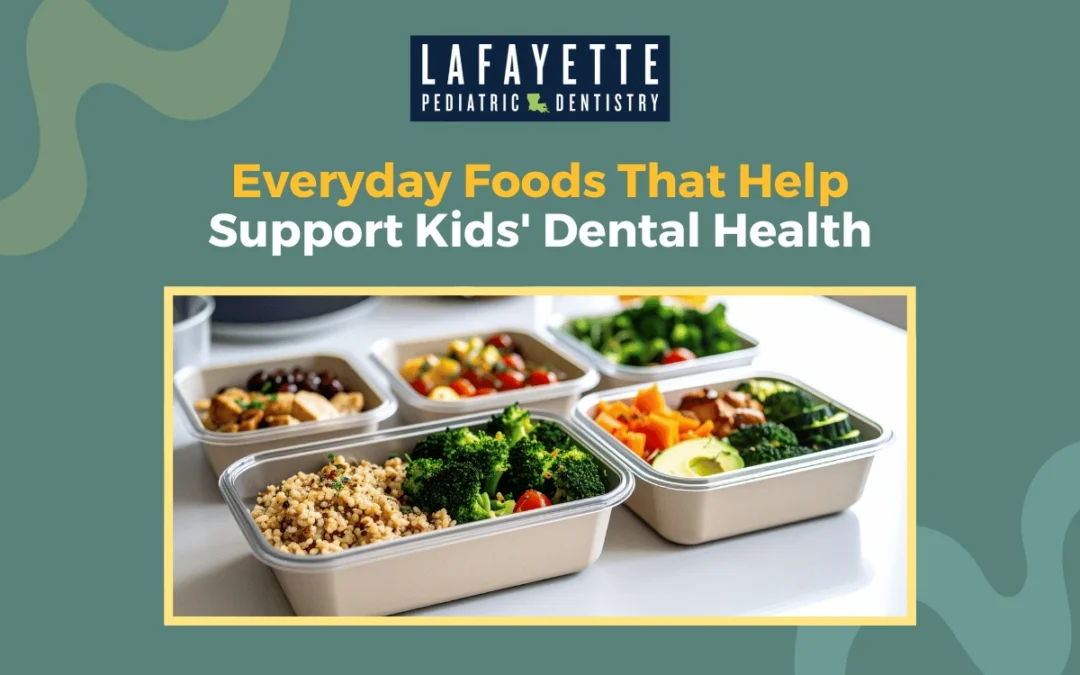
We spend a lot of time talking about brushing, flossing, and taking kids to the dentist twice a year, and for good reason. Those habits are part of a healthy routine. At the same time, there is another side of dental health that doesn’t get nearly as much attention: what kids eat every single day.
March is National Nutrition Month, which is a good time to look a little closer at that connection. The foods children eat on a regular basis can help protect their teeth or gradually wear them down.
Fill Their Plates with Dairy to Build Stronger Teeth
Strong teeth rely on nutrients like calcium and vitamin D, and dairy foods are an easy way to include both in a child’s diet. Milk is one of the most common sources of these nutrients.
Cheese can also help raise the pH level in the mouth after eating, which lowers acidity and creates an environment that is less likely to lead to cavities. Hard cheeses like cheddar are especially helpful in this way.
Yogurt is another good option. It provides calcium and phosphorus, which support strong enamel. It also contains probiotics that help maintain a healthier balance of bacteria in the mouth.
One thing to watch for is added sugar in flavored yogurts. Plain or lightly sweetened versions are generally a better choice for dental health than those with higher sugar content.
Add Fruits and Vegetables That Help Clean Teeth
Crunchy fruits and vegetables can do a lot to support kids’ oral health.
Apples and pears help increase saliva production. Saliva is one of the mouth’s natural defenses. It washes away food particles, helps neutralize acids, and supports stronger enamel over time. Apples can also provide a light scrubbing effect on tooth surfaces. They do not replace brushing, but they are a good snack to include during the day.
Carrots and celery offer similar benefits. As kids chew them, the firm texture helps clean along the teeth and gums. Celery is especially high in water and fiber, which can increase saliva flow while keeping sugar intake low.
Read also: The Surprising Role Saliva Plays in Kids’ Oral Health
Add Calcium and Phosphorus from These Everyday Protein Sources
Protein-rich foods can also provide important minerals that help keep teeth strong.
Eggs are a source of calcium and phosphorus, along with vitamin D, especially in the yolk. They are easy to serve at breakfast or as a snack, and many kids enjoy eating them in different forms.
Beans and lentils are not always thought of as dental foods, yet they provide phosphorus, magnesium, and other minerals that help maintain enamel strength. They are affordable and versatile, making them an easy addition to regular meals.
For older children, nuts and seeds are a nutrient-dense snack option. For example, almonds are a good source of calcium and are naturally low in sugar. Sesame seeds also contain good amounts of calcium and phosphorus.
Swap Refined Grains for Whole Grains
The type of grains we choose at breakfast and snack time can affect their oral health. Refined carbohydrates break down into sugars quickly and feed the bacteria that cause tooth decay.
Common examples of refined carbohydrates include chips, goldfish crackers, and artificial cheese flavored crackers. Whole grains, on the other hand, digest more slowly and still contain minerals that are lost during processing.
Oatmeal is a good example. It provides fiber and is naturally low in sugar when made plain. It is also filling, which can help reduce the urge to snack on sugary foods soon after. Topping it with fruit instead of syrup or brown sugar helps keep it more tooth-friendly.
Keep Kids Hydrated with Water and Water-Rich Foods
Water is one of the simplest ways to help protect kids’ teeth, and it is also one of the most effective. Drinking water throughout the day helps wash away food particles and bacteria that can stay in the mouth.
Water-rich fruits and vegetables, like watermelon and cucumbers, can make it easier for kids to stay hydrated, especially if they do not like plain water. These foods help with hydration and also provide fiber and natural sugars that are much less concentrated than what you find in juice or many packaged snacks.
Read also: How Water Helps Boost Your Child’s Oral Health
Keep Nutrition in Mind as Part of Your Child’s Overall Dental Care
Daily care at home, combined with regular dental visits and a diet that includes these everyday foods, is a balanced way to support their oral health. Regular brushing with fluoride toothpaste, daily flossing once teeth are touching, and routine dental visits are still the foundation of a child’s oral health. Nutrition works alongside these habits, not in place of them.
Our pediatric dental team in Lafayette is here for your family, and we serve families in Lafayette, Breaux Bridge, Youngsville, Carencro, and surrounding areas across the greater Acadiana area.
Contact Lafayette Pediatric Dentistry today to schedule your child’s appointment.