
We get this question all the time. A parent brings their child in for a checkup or because of tooth pain, and then we mention that their child might need a crown. Suddenly there are a lot of questions: Is that really necessary? Aren’t they just baby teeth? Why does my six-year-old need a crown?
It’s completely understandable. Most parents associate dental crowns with adult dentistry and not something their young child would need. But pediatric dental crowns are pretty common, and they serve an important purpose in protecting your child’s developing teeth.
What is a Pediatric Dental Crown?
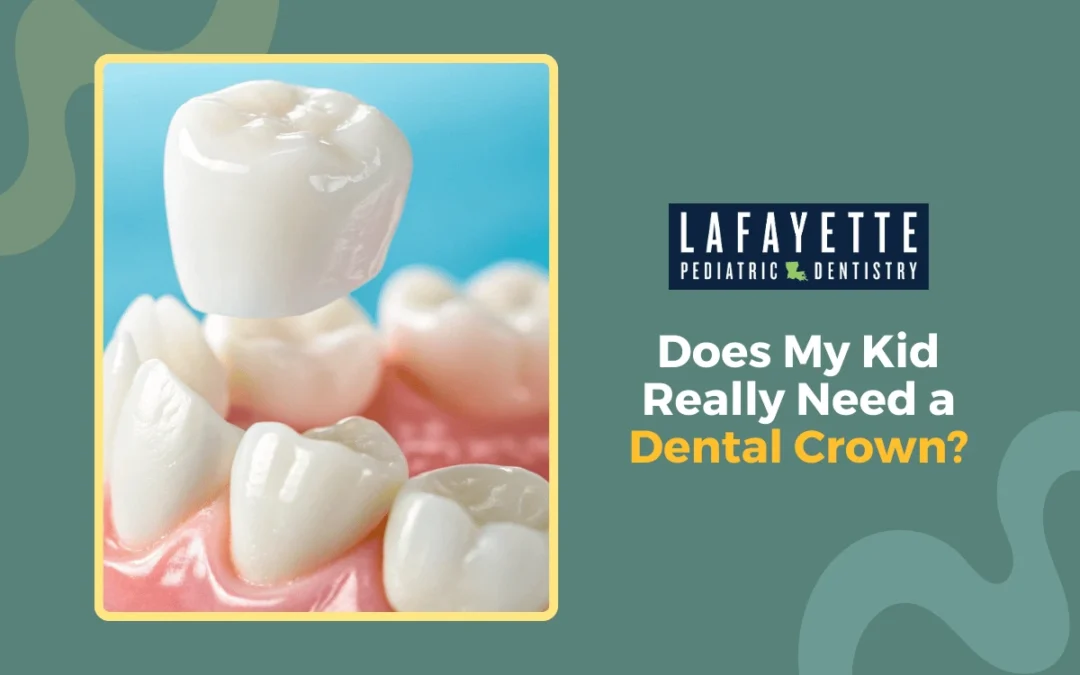
A pediatric dental crown is a tooth-shaped cap that covers the entire visible part of a damaged or decayed tooth. It restores the tooth’s shape and function while protecting it from further damage. These crowns can be made from different materials, including stainless steel (which is most common for back teeth) or tooth-colored materials.
Needing a crown doesn’t automatically mean something has gone terribly wrong. Kids get cavities. They fall and chip teeth. Sometimes their enamel just doesn’t develop quite right. These things happen, and crowns are often the best way to fix them and keep those teeth healthy until they’re ready to fall out naturally.
When Does a Child Need a Dental Crown?
There are several situations where a crown might be the best treatment option.
Deep Cavities and Tooth Decay
One of the most common reasons is a deep cavity or extensive tooth decay that’s too large for a regular filling. Sometimes decay spreads quickly in baby teeth because the enamel is thinner than in adult teeth. If a cavity gets big enough, there might not be enough healthy tooth structure left to support a filling. A crown reinforces the entire tooth and prevents it from breaking apart.
Broken or Chipped Teeth
Broken or chipped teeth are another big reason. Kids are active. They run, climb, play sports, and sometimes they fall. A tooth that’s been fractured or weakened needs protection, especially if a large piece broke off. Without a crown, that tooth could crack further or develop sensitivity issues.
After a Pulpotomy
Sometimes a child needs a pulpotomy, which we often call a baby root canal. This procedure removes infected or damaged pulp from inside the tooth. After a pulpotomy, the tooth is more fragile and prone to breaking, so we almost always place a crown to protect it afterwards.
Read more: What is a Pulpotomy Procedure in Baby Teeth?
Developmental Defects and Enamel Issues
Developmental defects can also require crowns. Some children are born with enamel issues or conditions like amelogenesis imperfecta, where the enamel doesn’t form properly. These teeth are weaker and more susceptible to decay and damage, so crowns help protect them.
High Cavity Risk
Crowns can also be helpful for kids who are at high risk for cavities. If your child has already had multiple cavities or has conditions that make decay more likely, crowns can provide extra protection for teeth that might otherwise develop more problems down the road.
Why Crowns are Important for Baby Teeth
A lot of parents might be wondering why we bother with all this treatment on teeth that are going to fall out anyway. But baby teeth actually do a lot of important work.
Holding Space for Permanent Teeth
First, baby teeth hold space for the permanent teeth that will eventually replace them. Each baby tooth acts as a placeholder and guides the permanent tooth into the correct position.
If a baby tooth is lost too early because of untreated decay or infection, the surrounding teeth can shift into that space. This can cause crowding and alignment problems that might require orthodontic treatment later.
Supporting Proper Eating and Nutrition
Baby teeth also help with eating and nutrition. A child with painful or missing teeth might avoid certain foods, especially crunchy fruits and vegetables or proteins that require more chewing. This can affect their diet and overall health.
Aiding Speech Development
Speech development depends on having a full set of teeth too. Certain sounds require the tongue to press against the teeth in specific ways. Missing or damaged front teeth can make it harder for kids to pronounce words correctly during those critical years when they’re learning to speak clearly.
Read more: Why Early Feeding, Speech, and Airway Screenings Matter for Your Little One
Promoting Jaw Development
Jaw development is tied to having healthy baby teeth. The act of chewing helps stimulate proper bone growth in the jaw. Teeth that hurt or don’t function properly can affect how the jaw develops and grows.
Preventing Infection and Pain
Beyond all that, untreated decay can lead to infection and pain. An abscessed baby tooth can cause significant discomfort and swelling, and in rare cases, infections can spread. Crowns help prevent these situations by protecting damaged teeth and stopping decay from progressing.
Read more: A Complete Guide to Primary Teeth Eruption
Crown vs. Fillings
Another question we get quite often is “Why can’t we just do a filling instead of a crown?” Sometimes we can, and we always choose the most conservative treatment that will work. But there are important differences between the two.
Fillings work well for small to medium-sized cavities where there’s still plenty of healthy tooth structure. They fill in the hole left by decay and restore the tooth’s function. But fillings have limits. If too much of the tooth is damaged or decayed, a filling won’t hold up. It can crack, break, or fall out, especially under the pressure of chewing.
Crowns cover the entire tooth, which means they provide much more protection and support. They’re more durable and last longer on severely damaged teeth. For back molars that handle a lot of chewing force, crowns are often the better choice because they can withstand that pressure better than fillings.
It’s like fixing a chair. If one leg has a small crack, you might be able to repair it with glue or a splint. But if the leg is broken in half or the wood is rotted through, you need to replace the whole leg. Crowns are similar: sometimes the damage is just too extensive for a simple patch job.
We understand that hearing your child needs a crown can feel overwhelming or concerning. But crowns really do help protect your child’s smile and oral health. They allow damaged teeth to function properly until they’re ready to fall out on their own and make way for permanent teeth.
That being said, prevention is still the best approach. Brushing twice a day with fluoride toothpaste, flossing once a day, regular dental visits, and a healthy diet low in sugary snacks and drinks can go a long way in preventing the decay and damage that lead to needing crowns in the first place. These habits are paramount to keeping your child’s teeth healthy.
But even with the best oral hygiene, sometimes crowns are still needed. And that’s okay.
Our Commitment to Your Child’s Oral Health
At Lafayette Pediatric Dentistry, we strive to provide quality dental care for kids of all ages throughout Acadiana in a stress-free environment to help them have great oral health throughout their lifetime. Our goal is to help your child develop habits and attitudes about dental care that will serve them well as they grow up.
Every appointment, every treatment, and every conversation is an opportunity to build that foundation. When kids feel comfortable and supported at the dentist, they’re more likely to take care of their teeth at home and continue seeing the dentist regularly as they get older.
If you have questions about whether your child needs a crown or want to schedule an appointment, give us a call at (337) 443-9944 or request an appointment online. We’re here to help.