
Every parent wants to take good care of their child’s teeth. In our office, we see families trying a wide range of tips, products, and home remedies they’ve heard about online or from other parents. Many of these ideas sound helpful at first.
Still, not everything that seems helpful actually benefits your child’s teeth. Some popular habits can even create new problems.
There is a lot of information circulating about children’s dental care, and it can be difficult to sort out what is accurate and what is just simply trending advice. Let’s walk through a few common beliefs, what they actually do, and why they may not be the best option for your child’s oral health.
Baking Soda
Baking soda has been used for decades as a cleaning agent, and many online sources suggest it can also help whiten teeth. It is even included in some toothpastes. Because of this, plenty of DIY dental care guides recommend mixing baking soda with water to create a homemade paste.
While it may sound harmless, using baking soda on your child’s teeth is not a great choice. Baking soda is abrasive, which means it can scrub away surface stains. The concern is that it can be too abrasive for young teeth.
Children’s enamel is thinner and softer than adult enamel, so repeated use can gradually wear it down. Once enamel is lost, it does not grow back.
There is another concern, especially with homemade baking soda pastes. Baking soda does not contain fluoride. Fluoride is what helps protect teeth from cavities and strengthens enamel. Brushing with baking soda may make teeth look a little cleaner for a short time, but it does not help guard against decay.
A fluoride toothpaste made for children is a better option. These formulas are designed for kids and provide the protection their developing teeth need.
Charcoal Toothpaste
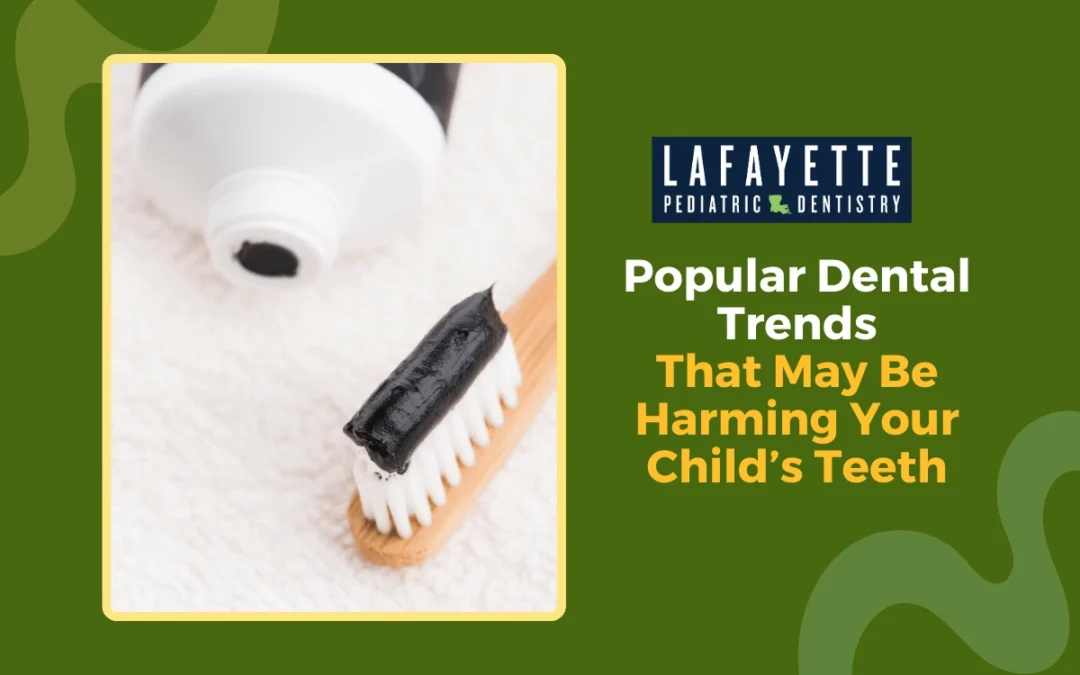
Charcoal toothpaste has gained a lot of attention recently. Marketing often promises whiter teeth and a “detoxifying” clean, which can sound appealing to parents looking for ways to improve their child’s oral health.
The concern is similar to baking soda. Charcoal toothpaste is highly abrasive. It works by scrubbing away surface particles and stains, but it can also wear down enamel in the process. For children whose permanent teeth are still coming in or whose enamel is still developing, this can be especially concerning.
There is also no reliable evidence that activated charcoal detoxifies teeth or removes toxins. Teeth do not require detoxing. They need consistent cleaning and protection from bacteria and acids, which charcoal does not provide.
Another issue is that many charcoal toothpastes do not contain fluoride. That means a child may be brushing regularly but not receiving the cavity protection fluoride offers.
In some cases, charcoal toothpaste can even contribute to staining. The fine particles can become lodged between teeth or along the gumline, which may darken areas over time rather than lighten them.
Read more: What Our Dentists Want You to Know About Charcoal Toothpaste for Kids
Teething Biscuits
Teething biscuits can seem like a simple solution. Your baby gets relief from sore gums, and the biscuit dissolves easily. Many parents offer them without much concern.
But many teething biscuits contain added sugars or sweeteners, and some are very similar to cookies marketed for babies. When a baby gnaws on one for an extended time, sugar remains on the gums and newly emerging teeth. Bacteria in the mouth feed on that sugar and produce acid, which can begin to affect both the gums and baby teeth.
This can lead to cavities at a very early age, even before all the teeth have come in. Decay in baby teeth can cause discomfort, infection, and may affect how permanent teeth develop later.
Teething biscuits do not have to be completely off limits, but it’s best to offer them occasionally rather than frequently. After your child finishes one, gently wipe their gums and teeth with a clean, damp cloth.
You may also consider other options for teething relief, such as a mesh teether filled with fruit or vegetable puree, a cold washcloth, or a refrigerated, not frozen, teething ring. These choices can soothe sore gums without exposing developing teeth to added sugars.
Read more: How to Soothe Your Baby During Teething (And Save Your Sanity!)
Whitening Strips
Whitening strips are not designed for children, especially those under age 14. There is a reason for that. The bleaching agents used in these products can be too strong for developing teeth.
A child’s enamel continues to mature into the teenage years, and exposure to these chemicals can lead to increased sensitivity, gum irritation, and uneven whitening as permanent teeth continue to erupt.
It is also common for permanent teeth to look slightly more yellow during certain stages of development. When adult teeth first come in, they often appear darker than baby teeth. This is because permanent teeth contain more dentin, the layer beneath the enamel, which has a naturally deeper color.
Your child’s teeth can become discolored for a variety of reasons, including certain medications or dental trauma. If you notice changes in color, talk with your child’s dentist. There are safer, more appropriate treatments available that can be provided under professional supervision.
Read more: Why Are My Child’s Teeth Turning Yellow? Common Causes of Tooth Discoloration in Kids
Coconut Oil Pulling
Oil pulling is an ancient practice that has seen a recent resurgence, and coconut oil is often the oil people choose. The idea is that swishing oil around your mouth for 10 to 20 minutes can pull toxins out, whiten teeth, and improve oral health.
Some people claim it is a natural alternative to mouthwash. However, oil pulling is not a substitute for standard oral care, and it has not been scientifically proven to provide clear benefits for oral health in adults or children.
Can swishing oil around your mouth dislodge some food particles? Yes. But so can swishing with water.
There is a lot of information out there about dental care, and it is easy to get pulled into trying products or remedies that sound promising or get a lot of attention.
What keeps your child’s teeth healthy is still fairly simple: brushing twice a day with fluoride toothpaste, flossing once a day, limiting sugary snacks and drinks, maintaining a healthy diet, and visiting the dentist regularly.
Staying consistent with these basics goes a long way. If something new sounds too good to be true, it probably is.
If you ever feel unsure about a product, trend, or concern, your pediatric dentist can answer your questions and talk through your options.
Our pediatric dental team at Lafayette Pediatric Dentistry is here to address any concerns you may have about your child’s oral health and help your child maintain healthy teeth into adulthood. We proudly serve families throughout the greater Acadiana area, including Lafayette, Youngsville, Broussard, and Breaux Bridge.
Request an appointment today or call our office to schedule a visit.