
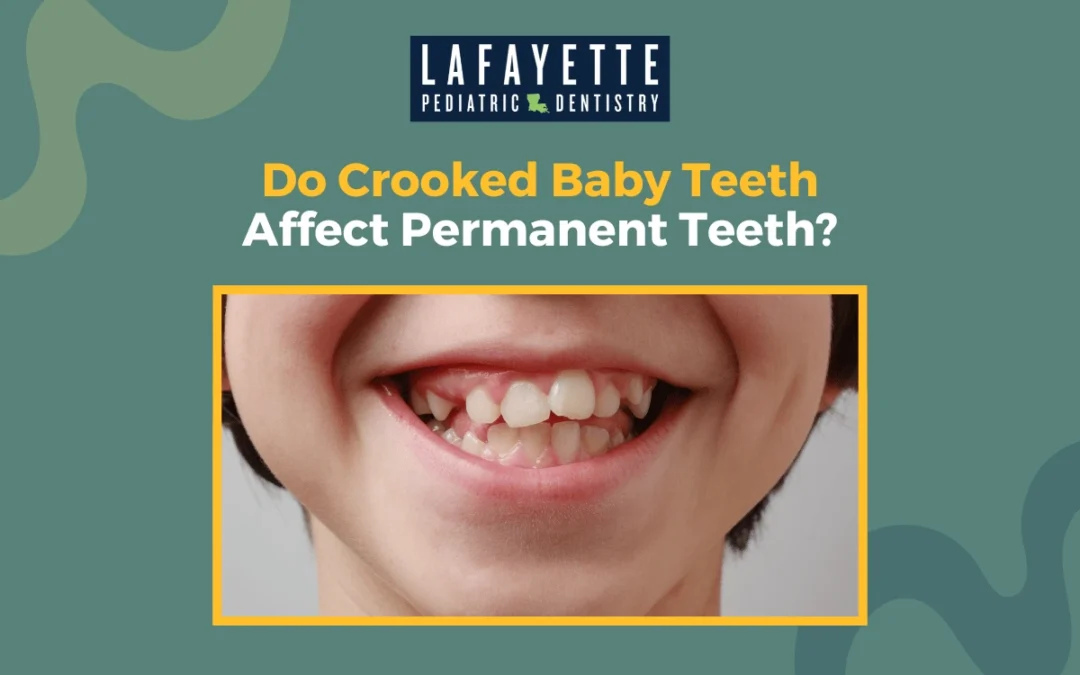
You glance at your child’s mouth and notice a few teeth that look slightly out of line, and it’s understandable to wonder what that could mean later on: “Will their adult teeth grow in the same way?”
Having an understanding of how baby teeth relate to permanent teeth can help you feel more prepared for what comes next.
Why Some Baby Teeth Come In Crooked
There are some common reasons why this can happen.
Genetics
Genetics can influence how teeth align in your child’s mouth. If you or your partner had crowded or misaligned teeth as kids, there is a decent chance your child might experience something similar.
Jaw size and tooth size are both inherited traits, and sometimes a child inherits large teeth from one parent and a smaller jaw from the other, which can lead to crowding right from the start.
Read more: How Do Genetics Affect Your Child’s Teeth? What You Can and Can’t Control
Prolonged Thumb Sucking or Pacifier Use
Prolonged thumb sucking or pacifier use can alter the position of baby teeth, especially the front ones. Constant pressure from a thumb or pacifier pushes the upper front teeth forward and can create an open bite where the top and bottom teeth do not meet properly.
Once the habit stops, some of this misalignment can self-correct, particularly if the child breaks the habit before age four.
Read more: 4 Tips on Weaning Your Little One from Thumb- and Finger-sucking
Natural Variation as Teeth Erupt
Sometimes teeth simply erupt at unusual angles as they push through the gums. A tooth may come in tilted or rotated at first but gradually shift into a better position as more teeth emerge and as your child’s jaw continues to grow.
How Baby Teeth Influence Permanent Teeth
Baby teeth function as natural space holders, with each one reserving the exact amount of room needed for the permanent tooth developing beneath it.
Misaligned baby teeth can sometimes shift neighboring teeth out of position as well. If one tooth tips or rotates significantly, it may press against the tooth next to it, creating a domino effect that changes the alignment of several teeth. This shift can influence how permanent teeth erupt later on.
Jaw growth also affects how permanent teeth come in. As your child’s jaw expands during their toddler and preschool years, teeth that looked crowded at age two may have plenty of space by age five.
The upper and lower jaws grow at different rates, and this growth creates additional room for teeth. If the jaw does not grow enough to fit the size of the incoming permanent teeth, crowding that began with baby teeth can continue or even become more noticeable.
When Crooked Baby Teeth Won’t Affect Permanent Teeth
There are situations where crooked baby teeth will not affect permanent teeth. Mild rotation or tilting often corrects itself as the jaw matures. A slightly turned tooth at age three might straighten out by age six without any intervention.
This occurs as the jaw widens and lengthens, giving teeth more room to adjust their positions naturally.
Spacing between baby teeth is also normal in most cases. The gaps you see between your child’s primary teeth create room for the larger permanent teeth that will replace them.
Permanent teeth are bigger than baby teeth, so extra space during the baby teeth stage usually means there is enough room for adult teeth to come in without crowding.
However, this is something that may be better evaluated by trained eyes. Sometimes parents see their child’s teeth slightly misaligned and assume it will resolve on its own, but they may not realize there are other factors that could cause the alignment to worsen.
When Crooked Baby Teeth Can Affect Permanent Teeth
Crowding That Increases Over Time
Crowding that worsens over time signals a potential problem. If baby teeth that were slightly crowded at age three become more tightly packed by age five, the permanent teeth will likely face even more significant crowding.
Permanent teeth are larger, so if baby teeth are already cramped, there will not be enough space for the adult teeth.
Teeth That Tilt or Rotate Enough to Change Eruption Paths
Teeth that tilt inward, outward, or rotate significantly can block the eruption path of permanent teeth. This can force the permanent tooth to erupt in an abnormal position, either coming in crooked or not erupting at all.
Bite Alignment Issues That Persist
Bite alignment problems, such as crossbites or severe overbites, rarely resolve without treatment. These involve how the upper and lower teeth fit together and typically require orthodontic care to correct.
If your child’s back teeth bite inside their lower teeth or if their top teeth extend far beyond their bottom teeth, this misalignment usually continues into the permanent dentition unless addressed.
Read more: Is Your Child’s Bite Off? Here’s What You Should Know About Overbites and Underbites
Prolonged Dental Habits
Ongoing habits like thumb sucking past age four or five continue to push teeth out of alignment. The longer the habit continues, the more likely the misalignment will influence permanent teeth.
Stopping the habit can allow some improvement, but if it continues until permanent teeth begin erupting, those teeth will likely come in misaligned as well.
It is important to maintain regular dental visits at least twice a year so your child’s dentist can monitor any changes in tooth development and recommend an orthodontic evaluation if needed, usually around age seven.
At this age, the first permanent molars have typically erupted, allowing the dentist to assess jaw growth patterns, identify possible crowding, and determine whether early intervention could prevent more complex issues later.
Your pediatric dentist is the most qualified person to spot early warning signs that could suggest the need for an orthodontic evaluation.
Schedule routine dental visits so your child’s dentist can track how their teeth are developing and address any concerns as they appear.
At Lafayette Pediatric Dentistry, your local pediatric dentist, we monitor each child’s individual dental growth pattern and offer guidance if we spot signs that may need attention. Contact us to book an appointment for your child!