
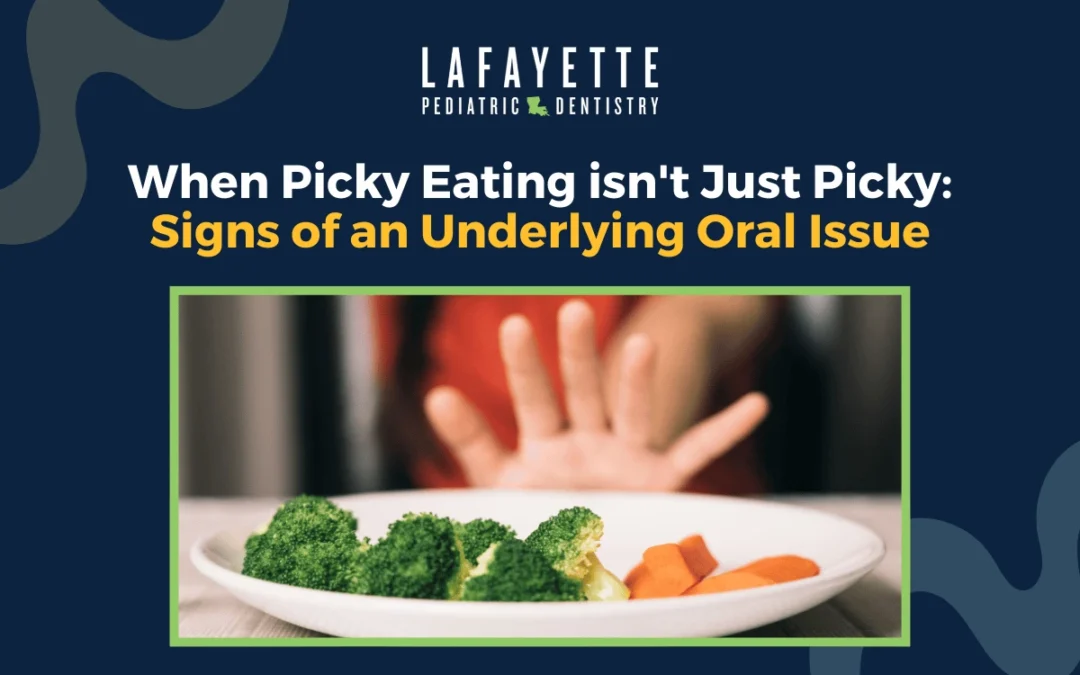
We’ve all heard the stories. A toddler who only eats chicken nuggets and goldfish crackers. A preschooler who gags at the sight of green vegetables. Picky eating is so common that most parents just assume their child will grow out of it eventually.
And sometimes they do. But sometimes, what looks like picky eating is actually something else entirely. Sometimes there’s an underlying oral issue causing the problem, and it gets overlooked because we just chalk it up to normal kid behavior.
Parents spend months or even years trying different strategies, bribing with dessert, cooking separate meals, and stressing over nutrition, when in reality, the issue might not be about preference at all, but about physical discomfort or difficulty that needs to be addressed.
What Counts as Normal Picky Eating
Most kids go through phases with food. These are typical developmental stages, and they can be frustrating, but they’re also usually temporary.
Normal picky eating tends to involve preferences rather than physical limitations. A child might not like the taste of something or might be going through a phase where they want the same foods repeatedly. They might refuse mixed foods or new foods at first but eventually try them after multiple exposures.
Mealtimes might involve some negotiation, but the child is generally able to eat a variety of textures without genuine distress. They can chew and swallow comfortably, even if they eat slowly, and they’re not showing signs of pain or fatigue while eating.
Normal picky eaters are also often inconsistent. They might refuse carrots at home but eat them at a friend’s house. They might turn down dinner yet happily snack on something similar later.
When Picky Eating Might Point to an Oral Issue
But what happens when it’s not just about preference? Sometimes, there are clear warning signs that something deeper is going on, and these are the things we watch for as pediatric dentists.
Gagging or Choking on Textures
This is a big one. We’re talking about kids who physically gag on foods that require much chewing, or who cough and struggle with anything that has mixed textures. That can signal a sensory or motor issue that needs to be addressed.
Avoiding Foods That Need Chewing
Kids who consistently avoid foods that require chewing are also showing us something important. If they’ll happily eat yogurt, applesauce, and mashed potatoes but refuse anything with more texture, they might be avoiding those foods because chewing is uncomfortable or difficult. Maybe there’s dental pain we don’t know about. Maybe their jaw gets tired easily.
Long or Difficult Mealtimes
Extended mealtimes can also be a red flag, especially if the child looks uncomfortable or seems to be working hard to eat. Some kids are naturally slow eaters, but if meals drag on for 45 minutes and your child looks worn out afterward, something may be wrong.
Watch for signs of mouth fatigue, such as excess drooling, difficulty moving food from one side of the mouth to the other, or giving up halfway through a meal.
Anxiety or Meltdowns at the Table
There’s a difference between a child throwing a fit over peas and one who’s genuinely panicked about eating. When meals trigger tears, fear, or full-blown meltdowns, it could be because eating actually hurts or feels physically difficult. Over time, that discomfort can turn into anxiety around food.
Common Oral-Motor or Sensory Issues That Can Cause Picky Eating
So what could be causing these issues? There are several possible causes, and they can vary from mild to more complex. Here are some of the most common oral issues that can make a child seem like a picky eater.
Tongue Tie or Lip Tie
Tongue tie or lip tie can restrict movement in ways that interfere with eating. If the tongue can’t move freely to move food around, or if tension in the lips or jaw affects how the mouth functions, a child may struggle with anything beyond soft, easy textures.
Read more: Tongue- and Lip-Ties: Addressing Common Misconceptions
Dental Problems or Pain
Dental pain is another common cause. Cavities hurt, loose teeth can be sensitive, and gum inflammation can make chewing uncomfortable. Kids don’t always tell you when their mouth hurts, especially if it’s been a slow buildup and they’ve adapted to it. Instead, they start avoiding foods that cause pain, and it can easily look like simple picky eating.
Enlarged Tonsils or Adenoids
Enlarged tonsils or adenoids can also interfere with eating. If a child’s airway is partially blocked, chewing and swallowing can make it harder to breathe comfortably. Over time, eating can start to feel tiring or stressful, which can lead them to avoid certain foods altogether.
How These Issues Affect Eating Long-Term
When these problems go unaddressed, the effects can compound over time.
Limited Food Variety and Nutritional Gaps
A child who avoids certain textures ends up eating a very limited range of foods, which can lead to nutritional deficiencies. If chewing meat is uncomfortable, they might not get enough protein. If fruits and vegetables are too hard to manage, they can miss out on key vitamins and fiber.
Stressful Family Mealtimes
Mealtimes can quickly turn into a source of tension instead of connection. Parents feel frustrated and worried, while kids feel pressured and anxious. Before long, everyone starts dreading dinner, and what should be a shared moment becomes a daily struggle.
Impact on Speech and Development
And in some cases, untreated oral issues can affect development in other areas too. Tongue ties or other structural problems can interfere with speech development. Social situations involving food can become uncomfortable, and a child’s relationship with eating can suffer for years if the underlying problem isn’t addressed.
Read more: Why Early Feeding, Speech, and Airway Screenings Matter for Your Little One
When To Get a Professional Evaluation
How do you know when it’s time to get help? If something feels off, if you’ve tried the usual strategies and nothing is improving, or if your child shows genuine distress around eating, it’s worth getting a professional evaluation.
Early intervention can change everything. Identifying and addressing oral issues early helps your child develop healthy eating habits before the problem becomes ingrained. It reduces stress for your family and allows your child to actually enjoy food instead of struggling through every meal.
And if you’re ever unsure, know that help is available. Our pediatric dental practice provides airway, feeding, and speech screenings for babies and young children throughout the greater Acadiana area to identify potential concerns early. We also work closely with a trusted network of specialists for any follow-up care your child may need.
Sometimes what looks like a behavioral issue has a physical cause, and finding that cause is the first step toward helping your child eat more comfortably. Call us to learn more about our services or schedule an appointment.